
1st Book Review: Jesus and the Disinherited!
Updated: Feb 1, 2021
Fabulous book. Loved it!
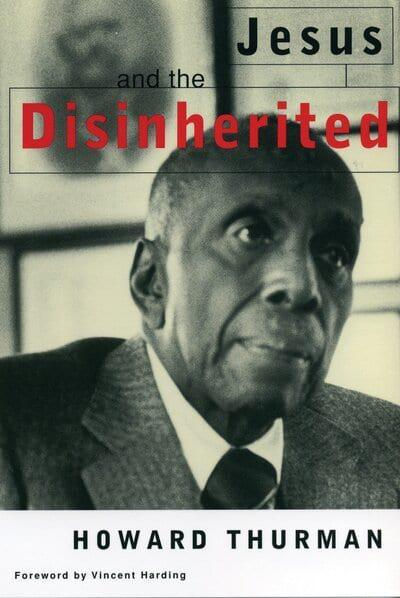
Jesus for the Disinherited.
I’d never heard of this book nor the author, Howard Thurman, until Rach gave it me at Christmas. Written in 1949 it has inspired no less than Barack Obama and Martin Luther King Jnr, the latter kept a copy with him at all times. Thurman also met with and exchanged ideas with Mahatma Ghandi.
Firstly I love the word: ‘disinherited’. It feels so much more accurate than simply: ‘the poor’. He observes that Jesus’ life experience was of deep subjugation, and likened it to his own personal family history of segregation and oppression. Jesus, had no status in his community which, in turn, was suffering the ignominy of being ruled by a foreign power. Had Jesus been kicked into a ditch by a Roman soldier he would have been just ‘another Jew in a ditch’ living in occupied territory, ruled by superior colonials.
Thurman’s faith, learnt on his Grandmothers knee (herself a former slave), was one steeped in the reality of oppression and slavery.
Sometimes Christians use the phrase ‘Liberation theology’. Well, Thurman, could be described as propagating a ‘Liberation spirituality’: A foundational step to anyone living under oppression is to free their mind, heart and soul to believe they have worth when the systems and life-experience in screams the opposite.
Jesus, an illegitimate child, former refugee, growing up in a disdained village, in a poor family had come to realise that his heavenly father knew every hair on his head! This fed his understanding of innate worth and was the bedrock which fed his esteem, freed him to love the outcast, enabled him to challenge those in power and forgive those who abused and killed him.
‘The masses of men who live with their backs constantly against the wall. What does our religion say to them?’ Thurman goes on to state ‘the search for an answer to this question is perhaps the most important religious quest of modern [oppressed] life.’ (It is also an important one for those concerned with ‘proclaiming the Good News’ as Jesus did ‘to the poor.’ (Luke 4 18).)
‘No external force however great can destroy a people if the oppressor does not first win the victory of the spirit over them,’ argues Thurman. The inverse is also true. To rise through the challenge of oppression (or ‘being disinherited’) one has to first find the belief that you have worth. As Bob Marley would put it, perhaps also inspired by Thurman: ‘none but ourselves can free our minds’.
The faith Jesus started was one born in oppression, then forged by the apostles early church under the fire of a persecution: dispersed, jailed, beaten, stoned and oppressed. In recent centuries (more than a millennia in fact), Christianity has often, but never exclusively, been a religion of those in power, (and, sadly, used to buttress power). The outreach to the poor is often on the back of this:
‘There is a grandeur and nobility in administering to anothers need out of one’s fullness and plenty.’ But, Thurman warns:
‘It is exceedingly difficult to hold one-self free from a certain contempt for those whose predicament makes moral appeal for defense and succour. It is the sin of pride and arrogance that has tended to vitiate the missionary impulses and make it an instrument of self-righteousness on the one hand and racial superiority on the other.’
Ouch.
The book is written using a combination of psychology, personal experience, theology and straight-forward logic. It describes firstly how the ‘disinherited’ experience their life and then how Jesus words penetrate into that. Thurmans’ personal experience of being ‘disinherited’ lead him to observe, in his own community: fear, despair, hatred, and a huge amount of energy used just to survive .
Much of Jesus words have been interpreted by white, power-based theology and framed in a sense of duty to give things to poor people. Noble as this is, and Thurman doesn’t disagree with it, in entirety, his challenge is to try and find a message for those who live under oppression, who wake with constant fear, who might learn deception as a necessary coping mechanism and who will struggle with bitterness and hatred of their enemies. Jesus words, are not purely about serving others but also about: ‘an offer to meet their [the dispossessed] needs.’
‘The kingdom of God is within.’ [said Jesus]….By inference he says: ‘You must abandon your fear of each other and fear only God. You must not indulge in any deception and dishonesty, even to save your lives. Your words must be Yea and Nay; [another reference to the words of Jesus] anything else is evil. Hatred is destructive to hated and hater alike. Love your enemy, that you may be children of your father who is heaven.’
Martin Luther King Junior was once challenged by a man of colour with this question: ‘Are you saying we should live a life more moral than the whites?’
This is a question Thurman takes on in the book:
Jesus, he argued, gave no excuses for not living a courageous life of integrity.
Addressing morality: ‘The insistence of Jesus on genuiness is absolute; mans relation to man and mans relation to God are one relation.’
Addressing fear: ‘You are in Gods work, so you need not fear man’s scorn. If they listen to your words, you will be satisfied. If they reject them then you must make their rejection your strength’,
Addressing despair and the passing of despair from generation to generation: “There must always be the hope that the effect of truthfulness can be realized in the mind of the oppressor as well as the oppressed. There is no substitute for such a faith.’ Faith gives hope and hope is the necessary tool for the young to dream, aspire, grow, develop and break free from the shackles of oppression.
…..and so much more is contained in this brilliant little book.
If your reading this from a white middle class background, I’d challenge you to take on board the message.
If your reading it feeling disinherited – then explore afresh the words of Jesus. Others, such as Thurman, Luther King Jnr and Barack Obama have found life, power and meaning in them.
Perhaps Thurmans book can be summed up with this final quote:
A man is a man, no more no less. The awareness of this fact marks the supreme moment of human dignity.


Comments